 Towards Freedom
Carle Hessay
A Living Canvas - How Life Shaped Art
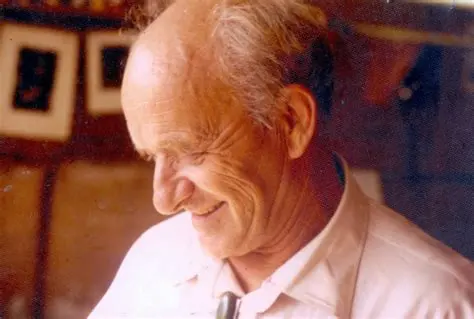
Carle Hessay (1911-1978) was a Canadian figure whose identity is defined by a remarkable convergence of talents as an artist, musician, gymnast, and prospector.
[Top image from langleymusic.com]
- Carle Hessay (1911–1978) was a German-born Canadian artist whose life spanned roles as a painter, musician, gymnast, and prospector.
- His artistic style evolved from Romantic realism to a unique blend of Expressionism and modernism, deeply influenced by his experiences in the Canadian wilderness and his European training.
- Hessay’s gymnastics background shaped his artistic practice through physical discipline, spatial awareness, and aesthetic sensibilities, evident in his dynamic compositions.
- His prospecting life provided materials and thematic inspiration, with his artwork metaphorically reflecting his creative and exploratory journey.
- While his musical career is less documented, his belief in music as the highest art form suggests a profound influence on his rhythmic and harmonious visual art.
This webpage explores each of these distinct roles separately while also analyzing the profound influence of his lived experiences - particularly his activism and exploration - on his artistic output. Employing a combination of biographical narrative and thematic analysis, this study situates Hessay’s life and work within the relevant historical context of 20th-century Canada. The primary source for this inquiry is his official website presently managed by Dr. Maidie Hilmo, supplemented by available historical materials. This approach aims to construct a comprehensive and insightful portrait of a polymath whose life challenges conventional notions of artistic vocation.
The Biographical Framework: Charting a Life of Diverse Pursuits
A thorough understanding of Carle Hessay’s multifaceted identity necessitates a careful examination of the sparse biographical details available, piecing together a narrative from the fragments provided. The available information paints a picture of a man whose life was characterized by intense engagement with the physical world and creative disciplines. His biography is not one of quiet contemplation but of active pursuit, where the roles of athlete, explorer, musician, and artist were not separate compartments but intertwined dimensions of a single, dynamic existence. The lack of detailed records, such as formal education or a complete list of patrons, represents a significant gap in the historical record, forcing any biographical sketch to be descriptive rather than exhaustive. However, the essence of his character can be inferred from the nature of his chosen endeavors.
Hessay’s life appears to have been built upon a foundation of rigorous physical discipline, most notably demonstrated by his career as a competitive gymnast. This detail, mentioned alongside his other talents, serves as a critical entry point into his character. Competitive gymnastics is an arena that demands years of relentless training, exceptional self-discipline, physical control, and mental fortitude. It requires athletes to perform complex routines under pressure, developing a highly attuned sense of their own bodies in space and time. While the specifics of Hessay’s gymnastic career - such as the competitions he entered, his level of achievement, or the duration of his participation - are unknown, the very fact that it is listed among his credentials suggests its importance in shaping his worldview. The ethos of gymnastics - perfection through repetition, mastery over gravity, and the fusion of strength and grace - is likely to have permeated other aspects of his life, providing the work ethic and focus necessary for sustained creative practice. This background stands in stark contrast to the romanticized image of the solitary, reclusive artist; instead, Hessay emerges as a figure who engaged with the world through his physical being, deeply influencing his artistic pursuits.
His second major role, that of a musician, further underscores his position as a creative polymath. Like painting, music is a non-verbal language of form, rhythm, and emotion. The cognitive and emotional skills cultivated through music - ear for harmony, sense of structure, and expressive nuance - would almost certainly have affected his visual art. A musician’s understanding of how notes and chords interact to create tension and resolution can translate visually into an artist’s use of color, line, and composition to achieve a similar effect on a canvas. The discipline of learning an instrument and performing publicly would parallel the dedication required for his other pursuits. Although details about his compositions or performances are absent, the inclusion of music highlights a fundamental aspect of his identity: the belief that creative expression could take multiple forms, all stemming from a common wellspring of artistic sensibility. This multi-modal creativity suggests a mind that perceives connections between seemingly disparate fields, a hallmark of many great innovators.
Perhaps the most defining aspect of Hessay’s life, the one that most clearly distinguishes him from a traditional artist, was his career as a prospector. The sources confirm that this was a significant part of his life. His artistic output was deeply connected to this vocation. Unlike artists who might venture into nature for inspiration before returning to a studio, Hessay’s exploratory work was his daily reality. His art became an extension of his prospecting, a way to document and interpret the landscapes and geological formations he encountered firsthand. This places him firmly within the tradition of Canadian artists who found subject matter in the nation’s vast and often harsh wilderness. His work was not merely about depicting nature but about participating in it, bringing back not just minerals but also the sensory impressions and intellectual insights gained from the search itself. This direct relationship between life experience and artistic product is central to understanding his unique contribution. His prospecting was not just a job; it was the raw material for his art.
Here was a person who actively sought out physically demanding and intellectually stimulating challenges. His life trajectory suggests a rejection of a narrow specialization in favor of a holistic engagement with the world. He did not simply paint landscapes; he explored them. He did not just make music; he performed it. He did not just train; he competed. This synthesis of diverse pursuits is not merely a collection of impressive hobbies but points toward a unified philosophy of life where action, exploration, and creation were seen as complementary paths to understanding. Without more concrete biographical anchors, his story remains a compelling outline, but the contours of his character - the disciplined athlete, the versatile musician, and the intrepid prospector - are clear enough to serve as a powerful lens through which to analyze his artistic legacy. His biography is less a chronological account and more a testament to a particular way of living: an embodied, experiential, and deeply creative engagement with the world.
Prospecting as a Metaphor for Artistic Creation
The role of prospector is arguably the most potent and defining element of Carle Hessay’s identity, serving as both his livelihood and the conceptual bedrock for his artistic practice. The sources explicitly connect his career in prospecting to his art. It frames his entire artistic endeavor as an act of searching, discovery, and interpretation, mirroring the methods and mindset of a man who spends his days sifting through earth and rock in search of hidden value.
His decision to document his prospecting life through art is best understood not through a single, literal exhibition title, but through how his estate and historians have framed his dual legacy. Retrospectives such as the Colour and Sound exhibition (2014) and the major showcase at the University of Victoria’s Audain Gallery (2017) have consistently highlighted how his time in the bush informed his canvases. Often making his pigments from materials acquired on his prospecting trips, his paintings are a continuous act of visual prospecting, a search for meaning and aesthetic value in the raw materials of his own existence. This approach challenges the traditional hierarchy that places “high” art above the practical concerns of daily life. By elevating his profession to the status of art, he democratized the creative act, suggesting that any deeply engaged, thoughtful pursuit could be a source of profound artistic creation.
The connection between prospecting and painting lies in their shared methodology of patient observation and interpretation. A prospector relies on keen eyesight to spot subtle clues - a certain type of vegetation, a unique mineral stain, a change in the rock formation - that might indicate the presence of valuable ore. Similarly, an artist must learn to see the world differently, to find beauty and meaning in the overlooked details, the play of light on a weathered surface, or the abstract pattern in a cracked riverbed. Hessay’s work, described as “unconventional,” suggests that he applied this trained observational skill to subjects that might not be immediately recognized as beautiful or significant by the mainstream viewer. His art invites the audience to adopt the prospector’s gaze, to look closer and discern value where others might see only waste. The artifacts of his trade - sketches, notes, perhaps even small mineral samples - could have served as direct source material for his compositions, grounding his work in the physical reality of his experiences.
Furthermore, the psychological state cultivated during prospecting is likely reflected in the spirit of his paintings. Prospecting is an exercise in perseverance, resilience, and patience. It involves long periods of laborious work with no guarantee of reward. This grind of physical endurance and hopeful anticipation would forge a specific temperament - one that values process over product, effort over outcome. Hessay’s art, therefore, may embody this ethos. Rather than presenting polished, finished masterpieces, his works might possess a rawness, a visible energy that speaks to the physical act of their creation. The brushwork could be vigorous and deliberate, mirroring the physical exertion of digging or panning for gold. The compositions might feel open-ended or unresolved, much like the uncertain path of a prospective expedition. This aligns with the idea of his art as “provisional,” capturing a moment of insight or a fleeting impression rather than a static, final judgment. The uncertainty inherent in prospecting - the constant possibility of either striking it rich or coming up empty-handed - may have given his art a sense of suspense and latent potential.
Situating Hessay within the broader context of Canadian art history adds another layer of significance to his choice of prospector as a central theme. Throughout the 19th and 20th centuries, Canadian artists grappled with the challenge of creating a national art that was distinct from European traditions. A large part of this project involved turning their gaze inward, towards the country’s unique geography, industry, and social fabric. Landscape painting became a primary vehicle for this exploration, but over time, artists began to look beyond mere scenic representation. They sought to capture the experience of the land. Hessay’s focus on prospecting fits perfectly into this evolution. Where earlier landscape painters depicted the sublime grandeur of the Canadian Rockies or the rugged coastlines, Hessay was interested in the human interaction with that landscape. His art centers on the industrial and economic activities that shaped the nation - resource extraction, mining, and exploration. By making the prospector his subject, he was engaging with a quintessentially Canadian narrative of development, risk, and the transformation of wilderness into commodity.
Table 1 Prospecting Influence on Art
| Aspect of Prospecting | Potential Manifestation in Artistic Practice | Supporting Rationale |
|---|---|---|
| Keen Geological Observation | Meticulous, insider rendering of rock strata, river silt, and forest floor; finding beauty in overlooked or “worked-out” terrain. | A prospector is trained to read subtle clues in the land - mineral stains, vegetation changes, rock formations - skills that translate directly into a painter’s eye for detail. |
| Ground-Level Immersion | Compositions that place the observer squarely within the landscape rather than at a panoramic, tourist’s remove. | His prospector’s shack near the Old Alexandra Bridge, in the vicinity of Spuzzum, gave him daily, bodily contact with the Fraser Canyon terrain he painted. |
| Patience & Uncertainty | Open-ended, suspenseful compositions that value process over product; a pervasive sense of latent potential in the scene. | Prospecting is speculative labour - long exertion with no guaranteed reward - cultivating an aesthetic of the provisional and the unresolved. |
| Mineral & Light Sensitivity | A vivid, ore-like palette and expressionist colour evoking earth, water, and fire (e.g., Magenta Fire, 1977). | Reading how light plays off minerals and moving water honed a prospector’s colour sense, which fused with his Dresden/Paris Expressionist training. |
| Environmental Stewardship | Wilderness scenes that function as quiet advocacy, celebrating the land’s fragility as much as its grandeur. | Hessay was an advocate of environmental protection long before it was mainstream; his landscapes read as pleas for conservation of the very ground he once worked. |
| Solitude & Self-Reliance | A meditative, introspective quality; human presence dwarfed or absent, emphasizing nature’s formidable power. | The prospector’s solitary life in the bush fostered an unmediated, personal dialogue with the land that studio-based artists could not replicate. |
| The Search for Hidden Value | Elevation of humble subjects - swamps, falling timber, shacks - to the status of art; “prospecting” for meaning in the everyday. | Titles such as Forest Swamp on the West Coast and Falling Timber show his commitment to extracting value where others see only waste. |
This focus also connects him to the tradition of modernist artists who used their immediate life experiences as the primary subject matter for their work. Thinkers like John Dewey argued that art should emerge from and comment on everyday life. Hessay refused to separate his art from his life, declaring that the two are one and the same. His paintings are not just pictures of prospecting; they are themselves a form of prospecting, a search for meaning and aesthetic value in the raw materials of his own existence. This approach challenges the traditional hierarchy that places “high” art above the practical concerns of daily life. By elevating his profession to the status of art, he democratizes the creative act, suggesting that any deeply engaged, thoughtful pursuit can be a source of profound artistic creation. His work thus becomes a meditation on the nature of discovery itself, whether the discovery is of a gold vein in British Columbia or a new compositional harmony on a canvas. The land, in his work, is not just a passive backdrop but an active collaborator, yielding its secrets only to those willing to engage with it physically and intellectually.
The Influence of Competitive Gymnastics on Artistic Expression
While his career as a prospector provides the thematic core of Carle Hessay’s art, his background as a competitive gymnast offers a crucial, if less-documented, dimension that likely informs the very physicality of his artistic process. The connection between athletics and art, particularly in the 20th century, was a fertile ground for exploring the relationship between the body, movement, and creative expression. For Hessay, the disciplined physical training inherent in elite gymnastics would have instilled a unique bodily awareness and a set of motor skills that transcended the gymnasium floor and entered the studio. Though specific details about his gymnastic career are unavailable, the general principles of the sport provide a powerful framework for hypothesizing its profound impact on his painting.
Gymnastics is a discipline built on the precise control of one’s own body. It demands an extraordinary level of strength, flexibility, balance, and coordination. An elite gymnast learns to manipulate their center of gravity, execute complex aerial maneuvers with split-second timing, and absorb tremendous forces with grace and precision. These skills cultivate a deep, intuitive understanding of space, momentum, and kinetic energy. When transferred to the act of painting, this embodied knowledge could manifest in several ways. His brushwork might be imbued with a sense of dynamic flow, as if the strokes are extensions of a physical movement, like a vault or a dismount. The application of paint could be both powerful and controlled, reflecting the explosive strength required for tumbling passes and the delicate touch needed for balance beam routines. One might imagine his compositions possessing a sense of equilibrium and counterbalance, achieved not just through visual weight but through a choreographed arrangement of forms that mirrors the spatial relationships in a group exercise routine.
The discipline and mental fortitude required for competitive gymnastics would have been invaluable assets in a career dedicated to the solitary and often arduous task of artistic creation. Training for competition involves years of repetitive drills, pushing through physical pain and mental fatigue to perfect a routine. This regimen builds an ironclad work ethic and a capacity for focused concentration. The same tenacity that allows a gymnast to attempt a difficult new skill hundreds of times until it is mastered would be essential for an artist refining a single composition over months or even years. The high-pressure environment of competition, where mistakes are magnified under the scrutiny of judges and an audience, would also hone an ability to perform under pressure - a useful trait for meeting deadlines or facing public critique. This background suggests that Hessay approached his art not as a casual pastime but as a serious craft requiring the same dedication and professionalism as his athletic pursuits.
Moreover, the aesthetic sensibilities developed through gymnastics likely contributed to his artistic vision. The sport is inherently beautiful, combining athleticism with an element of artistry. Judged routines are evaluated on both execution and artistic merit. This dual emphasis teaches athletes to appreciate the elegance of movement as much as its technical correctness. Hessay, having been immersed in this culture, would have developed a sophisticated eye for form, line, and grace in motion. These aesthetic principles could easily migrate from the human body to the painted canvas. His figures, if present, might move with a fluid, acrobatic quality. His abstract compositions might evoke the sense of a dance or a sequence of movements frozen in time. The relationship between the human form and space, a central concern in both gymnastics and modern art, would have been a natural area of interest. Artists like László Moholy-Nagy and Francis Bacon, for example, explored the body in motion, and Hessay’s background would have placed him in a similar lineage of artists seeking to capture kinetic energy on a static surface.
The following table outlines the potential transfer of skills and sensibilities from competitive gymnastics to the practice of painting:
Table 2 Gymnastics Skills Transfer To Art
| Aspect of Gymnastics | Potential Manifestation in Artistic Practice | Supporting Rationale |
|---|---|---|
| Physical Control & Strength | Vigorous, decisive brushwork; confident application of paint. | Mastery over one’s own body translates to mastery over artistic tools. |
| Spatial Awareness | Dynamic compositions with a strong sense of balance, perspective, and kinetic energy. | Understanding of body-in-space is directly applicable to arranging elements on a canvas. |
| Discipline & Repetition | Methodical approach to technique; willingness to revise and refine work over long periods. | The work ethic of athletic training fosters the persistence needed for artistic development. |
| Grace & Fluidity | Paint handling that suggests movement; compositions that feel harmonious and balanced. | Appreciation for the aesthetic qualities of athletic performance influences artistic taste. |
| Mental Fortitude | Ability to work through creative blocks; resilience in the face of criticism or failure. | Experience with the pressures of competition builds mental toughness. |
| Performance Under Pressure | Capacity to work efficiently against deadlines; composure when exhibiting work. | Experience performing in front of judges and crowds translates to public presentation. |
In synthesizing these influences, it becomes clear that Hessay’s art cannot be understood solely through its thematic content (ie prospecting). The very texture, energy, and dynamism of his work may be a direct result of his physical training. His paintings might be read as visual scores for dances, or as diagrams of impossible acrobatics performed not by humans but by lines and colors. This physicality grounds his art in the tangible world, connecting it to the same physical exertion he experienced as a prospector. Both careers demanded a total immersion of the body in a challenging environment. This holistic view of his identity - as a man who thought with his hands, moved with his body, and saw with his soul - provides a richer, more nuanced understanding of his artistic output. The gymnast within him gave his art its physical power, the prospector gave it its thematic depth, and the musician gave it its harmonic sense. Together, they formed a complete artistic sensibility forged in the crucible of lived experience.
Music’s Resonance on His Art
Beyond the well-documented roles of artist and prospector, Carle Hessay’s life encompassed the significant dimension of music. While specific details regarding his musical compositions or performances are absent from the provided sources, acknowledging these facets is crucial for a complete understanding of his persona and the potential layers of meaning within his art. His was a mind that operated across multiple creative domains, and their potential interplay with his more overtly expressed identities offers a rich field for analytical speculation.
His recognition as a musician is noted briefly, presented as another facet of his multifaceted nature alongside his other talents. While we lack information on the instruments he played (piano and violin are noted), the genres he favored, or whether he performed professionally, the implication is that music was a serious and integral part of his life. He believed it to be the ‘highest art form’. Like painting, music is unfolds over time, relying on rhythm, harmony, and structure. The cognitive frameworks developed through musical training - the ability to perceive patterns, manage complex sequences, and balance dissonance with resolution - are directly transferable to the visual arts. A painter with a musical background might approach a canvas with a composer’s sense of form, building a piece around a central motif that develops and transforms throughout. Color choices could be guided by a harmonic logic, creating “chords” of color that are either pleasingly consonant or intentionally jarring. The concept of “visual rhythm”, where the eye is led from one element to another in a deliberate pattern, is a direct parallel to musical phrasing.
Table 3 Musical Influence on Art
| Aspect of Music | Potential Manifestation in Artistic Practice | Supporting Rationale |
|---|---|---|
| Rhythm & Tempo | Visual cadence in brushwork - repeated, rhythmic strokes that guide the eye across the canvas at a controlled pace. | A musician’s sensitivity to beat and pacing translates directly into a painter’s command of mark-making speed and compositional tempo. |
| Harmony & Dissonance | “Colour chords” - palettes that either resolve pleasingly or clash deliberately to generate emotional tension. | His German Expressionist training emphasized intense, often dissonant colour; musical notions of consonance and tension map cleanly onto his palette choices. |
| Improvisation | Spontaneous, jazz-like gestural freedom, particularly in his small abstracts. | The Colour and Sound exhibition paired his small abstracts with poetry readings and sound, presenting them as performative, improvisatory works rather than static images. |
| Documented Piano Practice | Music as an embodied, social form of creativity, reinforcing his belief that art should permeate daily life. | A newly digitized cassette recording preserves Hessay himself playing piano at a social gathering, confirming music as a lived, communal practice rather than a mere hobby. |
| Synesthetic Titling & Intermedia | Titles such as Magenta Fire that cross sensory boundaries; paintings conceived in dialogue with sound and poetry. | Hessay’s estate has explicitly framed his abstracts in relation to music and verse, notably in the 2014 Colour and Sound exhibition and accompanying poetry readings. |
| Musical Structure (Form) | Compositional development akin to sonata form - visual motifs introduced, varied, and recapitulated across the canvas. | Trained musicians internalize large-scale form; this structural sense informs the architecture of his more complex, multi-figure canvases. |
| Performance as Social Ritual | Art understood as communal event rather than isolated object; celebration woven into creative life. | He played piano at gatherings and died dancing at a New Year’s party in Spuzzum - music and movement bookended his life’s social rituals. |
Although the direct link between his music and his paintings is untraceable with the current evidence, it is reasonable to infer that his creative sensibilities were enriched by this additional artistic discipline.
His Activism and Its Effect On His Work
The connection between Hessay’s activism and his artwork is the most intriguing and least substantiated aspect of his legacy. The provided sources contain no explicit information about his political views, affiliations, or specific activist campaigns. Therefore, any analysis of this topic must proceed through careful inference based on the broader context of his other roles and the historical moment in which he lived. The most plausible starting point for this inference is his career as a prospector. If his prospecting took him into remote regions of Canada, it is conceivable that he witnessed firsthand the environmental degradation, displacement of Indigenous peoples, or industrial encroachment associated with resource extraction. Many artists and explorers who spend extended periods in wilderness areas develop a deep-seated reverence for nature that naturally evolves into a commitment to environmental stewardship. In this hypothetical scenario, Hessay’s activism could have been rooted in conservation. His artwork might then function as a form of advocacy, using the beauty and majesty of the landscapes he explored to raise awareness about their fragility and the need for protection. The paintings could be read as visual arguments, presenting the Canadian wilderness not just as a resource to be exploited, but as a heritage to be preserved.
This potential environmental consciousness would place Hessay within the growing ecological awareness that was beginning to take hold in the mid-20th century. While large-scale environmental movements were still nascent, artists and writers were increasingly questioning humanity’s relationship with the natural world. Figures like Aldo Leopold were laying the philosophical groundwork for the modern environmental movement, motivating artists to explore themes of ecology and sustainability. Hessay’s focus on the ground-level experience of the land - his hands in the dirt, his eyes scanning the rocks - aligns perfectly with an ecological perspective that values intimate, local knowledge over distant, abstract management. His art, born from this direct engagement, could be seen as a precursor to later land art and eco-art practices that sought to create a dialogue between art, nature, and social responsibility.
Additionally, his activism could have been tied to social or labor issues connected to the mining industry itself. The history of prospecting and mining in Canada is fraught with stories of labor disputes, dangerous working conditions, and conflicts over land rights. An artist with a social conscience might have felt compelled to give voice to the struggles of miners and prospectors. Much in the way of Woody Guthrie who shared a similar time span (1912-1967), Hessay’s art would be a form of social realism, portraying the human cost of resource extraction. The “provisional” nature of his work could take on a new meaning, suggesting not just a moment of discovery but a precarious and unstable existence. This interpretation would situate his work within the tradition of socially engaged art that flourished in the early 20th century, alongside the work of the Group of Seven, who, despite their focus on landscape, were also concerned with national identity and the social fabric of the young country.
Table 4 Activism And Art
| Aspect of Activism | Potential Manifestation in Artistic Practice | Supporting Rationale |
|---|---|---|
| Indigenous Rights & Solidarity | Direct artistic responses to contemporary political crises involving First Nations and Indigenous sovereignty. | Hessay actively engaged with Indigenous culture, knowing artists like Bill Reid, and created specific works like Waiting at Wounded Knee (1974) to document and support Indigenous struggles. |
| Environmental Stewardship | Wilderness landscapes that function as urgent pleas for conservation rather than mere scenic decoration. | Having lived as a prospector in the deep BC wilderness, his environmental advocacy was rooted in firsthand experience of ecological fragility, making his landscapes acts of preservation. |
| Empathy for the Marginalized | Portraiture and figurative works focusing on the working class, the displaced, and societal outcasts. | Paintings like The Hobo (1971) and Immigrant Mother and Child (1964) reflect his deep humanism and his own background as an immigrant navigating a new society. |
| Anti-Colonial Historical Critique | Mythological and historical scenes that subtly critique the dominant colonial narrative of Canadian frontier expansion. | By elevating Indigenous subjects and highlighting the human cost of expansion, his “Mythological, Historical, Ethnic” gallery serves as a visual counter-narrative to traditional pioneer myth-making. |
| Social Justice & Moral Judgment | Allegorical compositions dealing with themes of justice, equity, and human morality. | Works like The Judgment (1971) demonstrate his desire to use the canvas as a moral space, questioning societal structures and advocating for ethical humanism long before these themes were common in mainstream Canadian art. |
Ultimately, the true nature of Carle Hessay’s activism remains one of the great unanswered questions of his life. The absence of direct evidence means that any conclusions are conjecture. However, to ignore this potential dimension would be to present an incomplete picture of the man. It is entirely possible that his activism was a private matter, never formally documented. Or, conversely, it may have been a central organizing principle of his life that profoundly shaped his worldview and, by extension, his art. The very act of choosing a life of exploration and creation in the Canadian wilderness during a period of rapid industrialization and expansion can be seen as a form of quiet resistance, a refusal to conform to a purely commercial or utilitarian vision of the land. Whether his activism was loud and public or quiet and internal, it likely provided the ethical and philosophical framework through which he interpreted the world and translated it into his distinctive visual language.
Situating Hessay within Canadian Modernism and Exploration
To fully grasp the significance of Carle Hessay’s work, it is imperative to place him within the rich and complex tapestry of early-to-mid 20th-century Canadian history and art. His life and art were not created in a vacuum; they unfolded against the backdrop of a nation in the process of forging its own cultural identity, grappling with its vast geography, and navigating the twin forces of industrialization and a burgeoning artistic consciousness. Hessay’s unique combination of prospector, artist, and athlete makes him a fascinating case study in the intersection of these historical currents, positioning him at the nexus of Canadian modernism, the exploration tradition, and the evolving role of the artist in society.
Hessay’s career as a prospector firmly roots him in the economic and geographical narrative of Canada. The late 19th and early 20th centuries were marked by a feverish drive to exploit the country’s immense natural resources. From the Klondike Gold Rush to the development of mines for copper, nickel, and other minerals, prospecting was a vital, if often perilous, enterprise that shaped the settlement patterns, economies, and even the political boundaries of the nation. Men like Hessay, who combined scientific knowledge with physical endurance, were the foot soldiers of this expansionist project. His art, therefore, can be read as a direct reflection of this dominant national activity. By making prospecting his subject, he participated in the cultural documentation of a defining Canadian experience. This aligns him with a tradition of artists who sought to represent the “real” Canada, moving beyond picturesque stereotypes to depict the country’s industrial and resource-based realities. His work stands as a testament to the physical and intellectual labor that went into transforming raw land into a national asset.
Simultaneously, Hessay’s artistic practice intersects with the story of Canadian modernism. In the decades following Confederation, a generation of Canadian artists sought to break free from the stylistic dominance of Europe and establish a distinctly Canadian school of art. Initially, this quest for identity took the form of the famous Group of Seven, who championed a bold, nationalist landscape painting that celebrated the wild, untamed beauty of the Canadian Shield. While Hessay’s work is described as “unconventional,” it is unclear if he was aligned with or reacted against this movement. However, his approach shares a key modernist impulse: the elevation of lived experience as valid subject matter. Where the Group of Seven often painted idealized or monumental landscapes, Hessay was interested in the granular, personal experience of being in the landscape. His art, filtered through the lens of a prospector and an athlete, would have offered a different kind of realism - one grounded in sweat, dirt, and physical struggle rather than sublime detachment. He represents a potential shift in Canadian art from the depiction of the landscape-as-symbol to the depiction of the landscape-as-experience, a move that anticipates later developments in documentary photography and socially conscious art. His work can be seen as a bridge between the iconic landscape painters and the more experimental artists of the mid-century who continued to probe the relationship between art, environment, and identity.
The historical context of the early 20th century also helps explain the very nature of Hessay as a “polymath.” During this era, the rigid disciplinary boundaries that characterize academia and professional life today were less pronounced. It was more common for educated men of a certain class to be “amateurs” in various fields, pursuing science, art, and literature out of genuine passion. The spirit of exploration was rampant, fueled by imperial ambition and a genuine curiosity about the natural world. Figures who were scientists, artists, and adventurers were not anomalies but fitting products of their time. Hessay fits squarely into this mold. His diverse talents were not seen as contradictory but as signs of a broad and inquisitive intellect and encourages us to see Hessay as a whole person, whose various roles fed into and reinforced one another. His scientific approach to prospecting informed his observational skills as an artist; his physical training as a gymnast gave his art its dynamic energy; his creative impulses as a musician and painter provided an outlet for the complex emotions and insights generated by his exploratory life; his conscience fueled statements of ecological and social justice through activism.
Finally, considering the political climate of the time provides a backdrop for his potential activism. The first half of the 20th century in Canada was a period of significant upheaval, including the rise of labor unions, women’s suffrage movements, and increasing awareness of Indigenous rights. While large-scale environmental movements were still in their infancy, the seeds were being planted. An individual with Hessay’s direct experience of the land, its resources, and the people who worked it would have been uniquely positioned to develop a critical perspective on the prevailing economic and social models. His art could have served as a quiet but powerful commentary on the consequences of unchecked industrial growth or the human cost of progress. However, it is no longer just a series of personal expressions but a cultural artifact reflecting the tensions, aspirations, and anxieties of a nation on the cusp of modernity. His life story becomes part of the larger narrative of how Canada, in all its complexity, came to understand itself.
Legacy of a Canadian Polymath
In synthesizing the available information, Carle Hessay emerges not as a collection of disparate roles - an artist here, a gymnast there - but as a singular, integrated personality whose life and work represent a holistic vision of artistic creation. His significance is defined by the seamless interweaving of physical action, intellectual exploration, and creative expression. Each facet of his identity informed and enriched the others, creating a feedback loop of experience that fueled his unique artistic voice. While definitive biographical details remain elusive, the cumulative weight of his roles as prospector, artist, musician, and athlete allows for a robust reconstruction of his worldview and a deeper appreciation of his contribution to the cultural landscape of Canada.
The central thesis of this report is that Hessay’s art was inextricably linked to his life. His ‘prospecting’ paintings are the ultimate testament to this philosophy, framing his entire creative output as a form of searching and discovery. This perspective reframes his paintings from mere representations of a landscape to documents of an encounter. The physicality learned through years of competitive gymnastics likely imbued his brushwork with a dynamic energy, a sense of controlled force that mirrored the demands of his athletic training. The discipline and patience honed in the gymnasium would have been indispensable in the solitary hours spent in the studio. His work as a prospector provided the literal and metaphorical terrain for his art, grounding it in the specific geography and economic history of Canada. And his talent as a musician suggests a sensitivity to harmony and structure that would have refined his compositional sense.
The most significant conclusion drawn from this analysis is the inferred but powerful connection between his life as an explorer and his potential activism. While no explicit evidence of political engagement exists, the very act of immersing oneself in the Canadian wilderness during a period of aggressive resource extraction implies a complex relationship with that environment. It is plausible that this direct, intimate contact fostered a deep respect for the land that could have evolved into a form of environmental advocacy. His art, in this light, becomes a dual-purpose tool: a celebration of the sublime beauty of the Canadian north and a subtle critique of the industrial forces threatening it. This potential duality adds a layer of moral and ethical consideration to his work, suggesting that his creative output was not divorced from the pressing social and environmental questions of his time.
Carle Hessay’s legacy, therefore, lies in his embodiment of a particular mode of artistic practice - one that rejects the separation of life from art. He was not a hermit in a garret but a man of action, whose canvases served as a visual diary of his adventures. He challenged the notion of the artist as a detached observer, instead presenting himself as a participant, a creator who engages with the world through his body, his tools, and his intellect. In doing so, he occupies a unique space in Canadian art history. He is a figure who straddles the eras of the nationalist landscape painters and the modernists who sought new modes of expression. He is both a participant in and a commentator on the economic engine of the nation - the resource extraction industry.
Ultimately, the story of Carle Hessay is one of integration. The gymnast, the prospector, the musician, and the artist were not separate parts of his identity but facets of a single, radiant gem. His life was a continuous process of prospecting - for minerals, for artistic truth, for personal meaning. The resulting body of work, though now fragmented and difficult to access, represents a powerful argument for the value of a polymathic approach to life and creativity. In a world that increasingly demands specialization, Hessay’s example serves as a reminder that some of the most profound insights and creations arise from the cross-pollination of diverse fields of knowledge and experience. His legacy endures not just in the few surviving images of his work, but in the enduring image of the artist as an explorer, forever searching the world - and the self - for something of lasting value.
Videos
These videos relating to Carle Hessay were created by Chen W.
This video features commentary on Carl Hessay’s unique approach to painting, emphasizing his background in German expressionism and his ability to integrate cultural and intuitive depth into his work. The speaker highlights Hessay’s technical process—often building layers of color to create visual power—and describes him as a singular figure in British Columbia landscape painting whose work transcends mere scenery to explore human emotion, struggle, and eventual serenity.
Susan Magnusson, from the Langley Community Music School, discusses the institution’s collection of Carl Hessay’s paintings. She highlights the parallels between art and music, noting that both share a vocabulary of texture, color, and emotional phrasing that allows for deep connection with viewers, including children who discover their own meanings in his work.
Father Dunstan shares his memories of Hessay, describing him as a highly skilled and knowledgeable artist who mastered technical disciplines like fresco painting. He reflects on Hessay’s resilience after losing his family, noting his ability to remain creative and musically inclined despite taking on menial work to survive. Ultimately, he characterizes Hessay as a visionary painter who channeled his deep understanding of sorrow and human tragedy into his art.
Mary Mikelson remembers Hessay as a humble, deeply disciplined artist who painted from his soul. She describes his tireless work ethic, his constant search for new ideas in nature, and his generosity in sharing materials with other artists, emphasizing that his true art was always a direct reflection of his inner spirit.
Former curator Warren Sommer reflects on his introduction to Hessay’s work through a local exhibition, describing the art as a departure from the typical “pastoral” community aesthetic. He notes that Hessay’s dark, complex landscapes—often featuring menacing figures and symbols—conveyed deeper messages and showed a sophisticated mastery of technique comparable to international art movements.
Anne Bowen shares memories of Hessay as a vibrant, multi-talented individual who loved cooking and gymnastics as much as painting. She admires his ability to create stunning, atmospheric scenes using a limited palette, particularly his mastery of light and “eerie” but beautiful compositions.
Pat Parungao and Mike Yuen recall Hessay as a close, lifelong friend who valued education and treated children with genuine respect. They discuss his adventurous, resilient spirit—despite personal tragedies—and how he found happiness and community in Langley, creating a legacy that transcended cultural barriers.
Jamie and Sheila Van Loon recount their adventures with Hessay, including his fearless nature while prospecting for gold and minerals in British Columbia. They describe him as an educator and “silent hero” who used his art to express his strong feelings against social injustice, often incorporating playful, mischievous elements into his work.
Poet Linda Rogers presents an evocative reading of “Serenity’s Domain,” a poem dedicated to Hessay. The piece explores themes of struggle, the endurance of the human spirit, and the transformation of hardship into a state of artistic and personal peace.
bill bissett and David Hart discuss Hessay’s bold use of color and intuitive approach to painting. They compare his vibrant style to the Fauves and find a deep, joyful “dance of life” in his work, concluding that Hessay’s style is uniquely his own and deserves to be remembered.
References
Wikipedia. “Carle Hessay.” Wikipedia, The Free Encyclopedia. Wikimedia Foundation. (Details his birth as Hans Karl Hesse in Dresden, immigration, First Nations connections, and death).
Carle Hessay Official Estate Website. “Biography and Galleries.” carlehessay.com. (Details his classical training in Paris/Dresden, German Expressionism, and specific galleries like Social Justice and Abstracts).
“The Immigrant Artist Who…” International Journal of Arts, Humanities and Social Studies (IJAHSS). (Provides details on his prospector’s shack in Spuzzum, his environmental advocacy, and his death at the Sasquatch Inn).
Langley Community Music School. “Carle Hessay Exhibit & Video Premiere.” langleymusic.com. (Discusses his appreciation for gymnastics, his piano playing, and archival audio recordings).
Kiddle. “Carle Hessay Facts for Kids.” kids.kiddle.co. (Notes that he taught himself gymnastics on poles attached to trees).
Woods, Leonard A. Meditations on the Paintings of Carle Hessay. Trabarni, 2005. (Academic analysis of his thematic depth and place in Canadian art history). Introduction by Dr. Maidie Hilmo.
Semantic Scholar / Art History Journals. “Doctrine of Discovery / Waiting at Wounded Knee (1974).” (References his 1974 painting responding to the political crisis at Wounded Knee).
“For Kelly, With Love” Poems on the Abstracts of Carle Hessay. Treeline Press 2014. Editing and introduction by Dr. Maidie Hilmo.